Search This Blog

Showing posts with label A BIB BKS:Esther. Show all posts

Saturday, July 24, 2010

Esther, The Book of 3


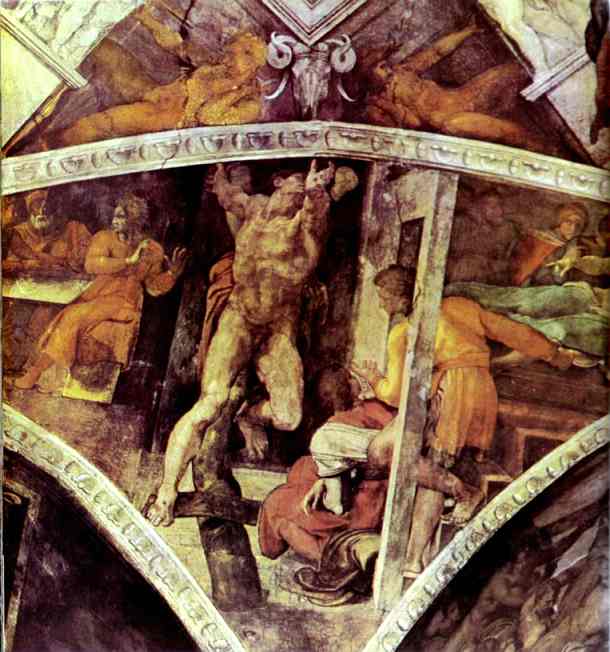
Michelangelo


scroll of Esther
Purim, a feast commemorating the delivery of Persian Jews from destruction, is celebrated in synagogues every year with the reading of the Scroll of Esther, called the megillah.


This 18th-century megillah, in the Jewish Museum in New York City, New York, is from Persia (Iran).


The Pierpont Morgan Library/Art Resource, NY
Microsoft ® Encarta ® 2009. © 1993-2008 Microsoft Corporation. All rights reserved.


This 18th-century painting by Italian artist Pompeo Batoni depicts King Ahasuerus extending his scepter to Queen Esther, allowing her to approach the throne. According to the Old Testament, Esther sought to prevent a massacre of the Jews and risked execution by approaching her husband unbidden. The painting is part of the collection of the Philadelphia Museum of Art.
Philadelphia Museum of Art/CORBIS-BETTMANN
Microsoft ® Encarta ® 2009. © 1993-2008 Microsoft Corporation. All rights reserved.


THE WALKTHROUGH


Esther in 6 Minutes


MV: Truthkeeper (readers, hearers):Jn18:37,38
Bib1Yr: Mt11,12
John In Prison

Friday, July 23, 2010

Esther,The Book of 2


Movie 2


Movie 3


Queen Esther | Full Movie    1948


MOVIE 4

Esther: The Bible Collection (1999) HD | Bible Film Series || HEAL


MOVIE 5 

One Night With The King (Esther)


extra  ESTHER (INCOMPLETE)


Superbook

Queen Esther


MV: The Warning, Lk13:8
Bib1Yr: Mt9,10The Scribes

Thursday, July 22, 2010

Esther, The Book of


[He. Ecter, Esther, a Syro-Arabian modification of the Persian word
satarah(setareh) from Isthar “star”]Real name, He. Hadas’sah “the myrtle”…Conjecture from a Median word astra “myrtle”. Can also mean hidden in hebrew, where it is said that Esther hid her nationality and lineage as Mordecai had advised. The Book of Esther in Hebrew can be understood as “The Book of Hiddenness,” representing God’s hiddenness in the story.


Background: The setting of this story is the Persian king’s palace in the same period as Ezra-Ne. Esther, a Jew, became a queen and was able to save in the Persian empire from a plot to exterminate. 10 chs

Author: Unknown. The author’s familiarity with minor details of the story and with Persian customs, in addition to his sympathy with the Jewish exiles, suggests that he was a Jew living in Persia at the time the events of the book took place. Mordecai’s journal (9:20) may have been one of his sources.


Date and Location: The familiarity with the details suggests Esther was written soon after the events it records, probably 450BC, and probably in Persia

Purpose:
*Encourage Jews remaining in Babylon and the rest of Persia to remain firm in their faith
*To show those Jews who had returned to Judah that God was at work among his people outside of Judah as well
*To demonstrate, to all believers, God’s providential care for his people


Unique Features:
^Esther and Song of Songs are the only 2 books biblical books that do not mention the name of God
^Esther records the origin of the festival of Purim( 9:16-19) and is the only biblical book to mention this festival

Comparison: See Ruth

Abbreviations: Esth. / Est./ Estr./ Es.

MV: The Sacrifice of Christ, Is38:17
Bib1Yr: Mt7,8The Centurion’s Servant