Search This Blog

Sunday, July 25, 2010

Job, The Book of


[He. Iyyob “Persecuted”]


Courtesy of Alexander Scourby(Bible Audio)The Book of Job


Background: The story of Job is found is in the first 2 and the last chapter of the book. Satan is allowed to bring several major tragedies into the life of this good and religious man. The main section of the book is a discussion between Job and 3 friends as to why Job has suffered so much trouble. The questions raised are not only human suffering but about God: is he fair? Is he even good? Traditional, contrite answers are shown to be inadequate. 42chs

Author: Unknown. Some believe Moses but there is no solid evidence.

Date: The early date (2000BC) is suggested by such things as:
*The patriarchal lifestyle seen in this book
*The use of the ancient patriarchal name for God (El Shaddai, “The Almighty, used 31 times)
*The absence of any mention of Israelite history

Location: in Israel for an Israel audience

Purpose:
^To address the question of why innocent people suffer
^To promote faith and trust in God, whose ways are higher than those of mankind (42:1-5 compare Is55:9)

Unique Features:
*unique appeal to all religions
*Job like Zechariah, gives a brief glimpse of confrontations between heavenly beings
*reference to Dinosaurs (“Behemoth” and “Leviathan”, 40:15; 41:1)

Comparison:
Genesis
^Job’s description of earth early history (38:4-11) provides a complimentary parallel Ge1
^Both use the Hebrew expressions for “sons of God” (2Ge6)
^Ancient patriarchal name for God, El Shaddai “The Almighty”, occurs in Ge and Job more than in any other books
Ecclesiastes
^Job explores the meaning of suffering; Ecclesiastes explores the meaning of life

Abbreviations: Job/Jb

MV: Mt7:8
Bib1Yr: Mt13, 14The Parables

Saturday, July 24, 2010

Esther, The Book of 3


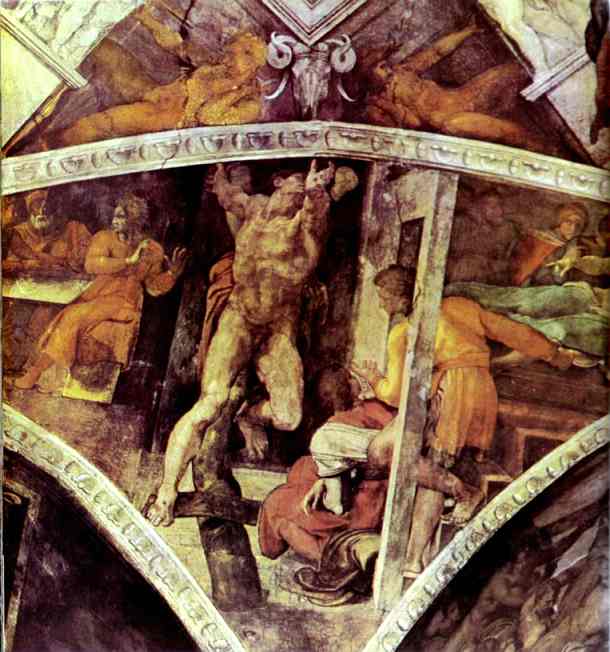
Michelangelo


scroll of Esther
Purim, a feast commemorating the delivery of Persian Jews from destruction, is celebrated in synagogues every year with the reading of the Scroll of Esther, called the megillah.


This 18th-century megillah, in the Jewish Museum in New York City, New York, is from Persia (Iran).


The Pierpont Morgan Library/Art Resource, NY
Microsoft ® Encarta ® 2009. © 1993-2008 Microsoft Corporation. All rights reserved.


This 18th-century painting by Italian artist Pompeo Batoni depicts King Ahasuerus extending his scepter to Queen Esther, allowing her to approach the throne. According to the Old Testament, Esther sought to prevent a massacre of the Jews and risked execution by approaching her husband unbidden. The painting is part of the collection of the Philadelphia Museum of Art.
Philadelphia Museum of Art/CORBIS-BETTMANN
Microsoft ® Encarta ® 2009. © 1993-2008 Microsoft Corporation. All rights reserved.


THE WALKTHROUGH


Esther in 6 Minutes


MV: Truthkeeper (readers, hearers):Jn18:37,38
Bib1Yr: Mt11,12
John In Prison

Friday, July 23, 2010

Esther,The Book of 2


Movie 2


Movie 3


Queen Esther | Full Movie    1948


MOVIE 4

Esther: The Bible Collection (1999) HD | Bible Film Series || HEAL


MOVIE 5 

One Night With The King (Esther)


extra  ESTHER (INCOMPLETE)


Superbook

Queen Esther


MV: The Warning, Lk13:8
Bib1Yr: Mt9,10The Scribes

Thursday, July 22, 2010

Esther, The Book of


[He. Ecter, Esther, a Syro-Arabian modification of the Persian word
satarah(setareh) from Isthar “star”]Real name, He. Hadas’sah “the myrtle”…Conjecture from a Median word astra “myrtle”. Can also mean hidden in hebrew, where it is said that Esther hid her nationality and lineage as Mordecai had advised. The Book of Esther in Hebrew can be understood as “The Book of Hiddenness,” representing God’s hiddenness in the story.


Background: The setting of this story is the Persian king’s palace in the same period as Ezra-Ne. Esther, a Jew, became a queen and was able to save in the Persian empire from a plot to exterminate. 10 chs

Author: Unknown. The author’s familiarity with minor details of the story and with Persian customs, in addition to his sympathy with the Jewish exiles, suggests that he was a Jew living in Persia at the time the events of the book took place. Mordecai’s journal (9:20) may have been one of his sources.


Date and Location: The familiarity with the details suggests Esther was written soon after the events it records, probably 450BC, and probably in Persia

Purpose:
*Encourage Jews remaining in Babylon and the rest of Persia to remain firm in their faith
*To show those Jews who had returned to Judah that God was at work among his people outside of Judah as well
*To demonstrate, to all believers, God’s providential care for his people


Unique Features:
^Esther and Song of Songs are the only 2 books biblical books that do not mention the name of God
^Esther records the origin of the festival of Purim( 9:16-19) and is the only biblical book to mention this festival

Comparison: See Ruth

Abbreviations: Esth. / Est./ Estr./ Es.

MV: The Sacrifice of Christ, Is38:17
Bib1Yr: Mt7,8The Centurion’s Servant

Wednesday, July 21, 2010

Nehemiah, The Book of 3


THE WALKTHROUGH


Nehemiah in 6 Minutes


MV: Those Who Do Not Receive, Zec7:12,13
Bib1Yr:Mt5,6
Start of Lessons

Monday, July 19, 2010

Nehemiah,The Book of


[He. Nechemyah “consolation of Yah”]


Background: Another leader in establishing the new community, Nehemiah organized the rebuilding of the walls round Jerusalem, so vital to its security (1-7). When this was done Ezra read the law (Torah) to the people and led them in a confession of their disobedience to God and then to a promise to obey him in the future (8-10). Nehemiah also carried through several social reform (11-13)13chs

Author: Ezra using Nehemiah’s memoirs. Nehemiah obviously authored sections directly attributed to him, including 1-7,13, where the first-person pronouns refer to him


Date and Location: See Ezra

Recipients: See Ezra

Purpose: See Ezra

Unique Features:
*Nehemiah is chronologically The final historical book of OT
*Though mostly compiled by Ezra, Nehemiah is the most autobiographical of the Bible’s historical books
*1 of the best examples in scripture of a man committed to a vision and to encourage others to join him in fulfilling that vision
*Artaxerxes’ decree(2:8) marks the official start of the 70 weeks prophesied in Da9:25-27

Comparison: See Ezra

Abbreviations: Neh. /Ne

MV: Dt11:18
Bib1Yr: Mt1,2Genealogy of Jesus

Sunday, July 18, 2010

Ezra, The Book of 3


THE WALKTHROUGH


Ezra in 7 minutes


MV: Ps119:11
Bib1Yr: Zechariah, Malachi


Friday, July 16, 2010

Ezra, The Book of


[He. Ezra “helper”]


Background: Follows 2Ch.. King Cyrus issued a decree allowing the Jews to return to Israel and rebuild the Jerusalem Temple. In ch3-6, we learn that initially the altar was rebuilt and sacrifices resumed but opposition halted temple rebuilding for many yrs before completed and dedicated. Later,(7-10) Ezra, an expert on the Jewish law, was sent from Babylon to help and guide the newly established community. The main problem was that the Jews were intermarrying with other nations, threatening national identity. 10chs

Author: Ezra, 7:28;8, 9

*First hand knowledge of many events in both books
*Ezra-Ne bears marked similarities to Chr. And there is strong traditional support for Ezra authorizing Chr.
*Most conservative scholars believe an unknown “Chronicler” may have been the final editor of Ezra ,Ne and Chr.

Date and Location: Ezra-Ne events covers 93yrs; compilation was probably completed in 430BC in Jerusalem.

Recipients: Jews return from Babylon; Represent all 12 tribes

Purpose:
^Reassures returning exiles that God would keep his covenant, “hope for Israel”, 10: 2
^Demonstrate the power of Prayer (9,10Ne10) and importance of the Word of God during crisis
^Showing what can happen when just one person (Ezra, Nehemiah respectively) takes a stand for the Lord

Unique Features:
*Stories of ministry partnerships such as Aaron-Moses; Elijah-Elisha; Ezra-Ne tells of 3:Zerubbabel-Jeshua; Haggai-Zechariah; Ezra-Nehemiah
*Ezra, one of the last OT authors and the first of the the Jewish scribes who would preserve the OT canon.
*Ezra is one of two books that have Aramaic ,a sister language of Hebrew. The other is Da.

Comparison:
Ezra-Ne-Ch Ezra’s involvement with all 4 books is suggest by these similarities
^Both contains many lists
^Last 2 verses of 2Ch36:22,23 to first 3 verses of Ezra
^Similar expression “the house of God”
^Levites and temple assistants are prominent

Ezra-Ne-Haggai
*Compairing the new temple with the former Temple of Solomon, 3:12Hg2:3
*Speak of the guidance of the spirit of God, Ne9:20
*speak of God instilling an enthusiasm in the returning exiles, 1:5Hg1:14

Abbreviations: Ezr

MV: You put it in your heart, Ps37:31
Bib1Yr: Micah, Nahum

Thursday, July 15, 2010

The Second Chronicles 2


THE WALKTHROUGH


I and II Chronicles in 5 minutes


MV: God place it in your Heart, He10:16
Bib1Yr: Amos, Obadiah, Jonah

Wednesday, July 14, 2010

The Second Chronicles


Background: Solomon, the builder of the Temple, is the focus of ch1-9. The remaining chapters, is only in the history of Judah, through whom God would continue his purpose. Special attention is also given to kings who promoted religious reform. The end of the book goes beyond 2K as it hints that the period in exile in Babylon is about to end. Persia has taken over the Babylonian empire. 36chs

Author: See 1Ch.


Date and Location: See 1Ch.

Recipients: See 1Ch.

Purpose: See 1Ch. 2Ch. Shows God’s continuing faithfulness to the house of David (7:17,18)

Unique Features: only found in 2Ch. And not in the parallel in 1,2, K
*Miracle at the end of Solomon’s prayer (7:1-3)
*The defection of godly Levites and other northern Israelites to Judah after civil war (11:13-17)
*The temporary humbling of Rehoboam (12:2-8, 12)
*The stoning of Zechariah (24:2-22)
*The conversion of Manasseh (33:10-17)
8Various additional details about Jehoshaphat, Uzziah, Hezekiah and Josiah

Comparison: See 1,2K
Ex
^Bezalel (Ex31:2) and Solomon (1Ch28:6)
^Both Bezalel and Solomon, of the tribe of Judah  
^Both Bezalel and Solomon, were guided by the Spirit in the work (1:1-12; Ex31:3)
^The glory of God appeared at the dedication of both Tabernacle and the temple (7:1 Ex40:34)

Abbreviations: 2Chron. / Chro. / Chr. / Ch

MV: Ez33:5
Bib1Yr: Hosea, Joel

Tuesday, July 13, 2010

The First Chronicles 3


Tel Dan Stela

One of the most important discoveries of recent years is the Tel Dan stela, uncovered in the city of Dan in the area of the Northern kingdom in 1993.

 “Until the stela’s discovery, the formation of the state of Israel could not be dated later than the mid-ninth century BCE, because Assyrian epigraphs of the 850s and 840s BCE and the roughly contemporary Mesha stela mentioned kings of Israel, some (Ahab, Omri, Jehu, and, later, Joash) by name.” It is too early to really know the full extent of the effect that the Tel Dan stela will have on the historical studies of ancient Israel, but some preliminary conclusions have been reached. 

The best dating of the stela places its origins close to the end of the ninth century BCE. Ben-Hadad II, who was the king of Damascus at that time, most likely had it written in his honor. 

Ben-Hadad II conquered Dan during this time period; however, he lost it again as his kingdom was taken over by Assyria and he was forced to fortify his northern border in defense. The stela was incorporated into a wall in Dan by an Israelite king thirty to forty years after it was made. 

One of the most important questions that the stela answers is the reality of David as an historical figure. There are no other epigraphic remains that mention David or his dynasty, but the Tel Dan stela specifically mentions “the house of David” within its text.(50) 

These discoveries have led scholars great lengths in reconstructing the histories of the divided kingdoms and in corroborating the writings of the Bible as true history.


MV: Word of God, Jas 1:21
Bib1Yr: Da10-12Fall By The Sword

Monday, July 12, 2010

Sunday, July 11, 2010

The First Chronicles


[He. Dibre Hayyamim]

Background: The Chronicler shows David laid the foundations of Israel’s worship even though he did not build the temple. In the first 9chs.he uses family trees to trace the history of Israel from Adam to the return from exile to show that Judah is the true people of God. 29chs.

Author: Unknown, though traditionally ascribes authorship to Ezra the priest. 1,2 Chron. Were originally one document. The chronicler use court records: The Book of the Kings of Israel (9:1; 2Ch20:34); Kin David’s official records (27:24) and The Book of the Kings of Judah and Israel, cited several times in 2 Chr.

Date and Location: Aside from the opening genealogy,1-9, the events of 1,2Chron. – from the death of Saul to the decree of Cyrus-took place 1010-538BC. However, the genealogy of Zerubbabel(3:17-21) takes us beyond 538. The completed book were probably compiled in the in the postexilic period, about 450-430, probably in Jerusalem where the court records were kept.

Recipients: 1,2 Chron was written for the 2nd and 3rd groups of Jews returning from the exile in 457 and 445BC.During the time Ezra, Nehemiah and Malachi. This Jews needed to be encourage in rebuilding their nation


Purpose:
*To provide a religious history of Israel- from Saul to the return from Babylon(S and K), record the political history of that same period.
*To demonstrate to the postexilic Jews, who were unstable in their faith, that God was still active and would keep his promise.
*To show that God would faithful to the Davidic throne (17:13, 14, 24, 25) and the Persian king (2Ch36:22,23)
*While waiting for the Davidic King they have the Temple-as a sign of God’s continued blessing


Unique Features: Only found in 1chr.and not in the parallel in 2S

*Genealogy of the Tribes, 1-9
*Extensive preparation, 15, 16
*Extensive preparations for building of the Temple, 22-29
*A Psalm of David, ch16
*The fact that Satan encouraged David’s census of Israel, 21:1

Comparison: 1Ch. Provides details about David and his associates not given in 2S

Abbreviations: 1Chron. / Chro. / Chr. / Ch


MV: 1Co15:56, 57
Bib1Yr: Da6, 7Darius

Saturday, July 10, 2010

2Kings, The Fourth Book of The Kings 3


from fourquestions.us website


Mesha Stela

Some archaeological discoveries have shed light on the divided kingdom of Israel

The Mesha stela is an account by Mesha, a king of Moab in the ninth century BCE, of his deliverance of Moab from the rule of Judah under the king Omri. 


The Prism of Sennacherib is an account of Sennacherib’s invasion of Judah and his defeat of the fortified cities of Hezekiah, the King of Judah. No mention is made of Sennacherib’s attempt to defeat Jerusalem, as it was customary for the Assyrians to leave their defeats out of the official records.


THE WALKTHROUGH


I and II Kings in 7 Minutes (Part 3)


MV: Rescuing From Death, Ps56:13
Bib1Yr: Da 4,5
Belteshazzar

Friday, July 9, 2010

2Kings, The Fourth Book of The Kings 2

Elisha


Athaliah


Josiah


MV: Why Do You Want To Know The God of This Bible? Ps6:4
Bib1Yr: Da2,3Nebuchadnezzar’s Dream


Thursday, July 8, 2010

2Kings, The Fourth Book of The Kings


Background: Elijah’s death and the emergence of his ward the prophet Elisha occupy the early chapters. The remaining sweep of the history covers some 300yrs. and from a religious point of view is all downhill apart from 1 or 2 religious revival promoted by the remaining monarch. The end of the North Kingdom comes a century and half before that of Judah, but in both cases it is understood as inevitable punishment for turning away from God. 25chs.

Author: Unknown. Possibly Jeremiah, recording the final day of the southern kingdom, since he enjoyed a good relationship with Josiah. Some scholars think Jeremiah wrote all of 1,2Kings, though he could not have written the final chapter of the 2Kings, since he was not in exile in Babylon.

Date and Location: See 1K. Chapter 25 was probably recorded in Babylon, within 30yrs after the fall of Jerusalem 586. The Jews were allowed to maintain scribal activities while in captivity

Purpose: See 1K: purpose


Unique Features:
*Records final 2 OT resurrections (4:32-37; 13:20, 21). For the first see 1K17:17-24
*The second and third of 3 occasions when God rolled back the waters of Jordan River (2:8, 14; see Js3)
*Records the second OT miracle involving the rotation of the earth around the sound (20:8-11) see Js10:12-14)
*2K18, 19, Herodotus attributed the destruction of the Assyrian army to mice and Bubonic plague

Comparison:
Isaiah
^Both record the attack of Sennacherib and Hezekiah’s illness (18:13-20:21; Is36-39

Jeremiah
^Both records of the Southern Kingdom’s final days, its fall, and Jehoiachin’s fate in Babylon(24:18-25:30; Jr52) see Chr

Abbreviations: 2Kin. /Kgs. /Ki. / K.

MV: Memorize and understand, 1Co15:2
Bib1Yr: Da 1Daniel


Wednesday, July 7, 2010

1Kings,Third Book of The Kings 3


THE WALKTHROUGH


I and II Kings in 7 Minutes (Part 2)


MV: Jot your Questions! Mt7:7
Bib1Yr: Ez47,48
House Parts

Tuesday, July 6, 2010

Monday, July 5, 2010

1Kings,Third Book of The Kings


Fourth Book of the Former Prophets
[He. Melakim}


Background: Covering 400yrs of Israel’s history. The first 11chs concerns Solomon, third king of Israel. His important centers on his building of the Jerusalem Temple, the focal point of Israel’s worship. His son Rehoboam, inherited a dissatisfied nation and due to his foolishness attitude 10tribes formed themselves into a separate state under a former official of Solomon called Jeroboam(as Israel, Northern Kingdom). The remaining 2 tribes as Judah(Southern Kingdom). Its history is recounted in the remaining chapters of 1,2 Kings. Elijah, an important prophet, dominates the end of 1K. 22Chs

Author: Unknown. Perhaps Jeremiah(see 2K) The author probably use the court records: The Book of Acts of Solomon(11:41), The Book of the History of the Kings of Israel(14:19), and The Book of the History of the Kings of Judah(14:29)


Date: The statement in both 1,2 Kings that a nationwide lack of righteousness had existed “to this day”(12:19;2K17:33,34,41) suggest the most events of these books were recorded in the final yrs of the Southern Kingdom, c630-600BC

Location: Probably Jerusalem, considering the author’s use of court records. The Book of the History of the King of Israel must have been brought to Jerusalem after the fall of the north.

Purpose:
*To remind them of the prophetic viewpoint”: obedience to God brings reward; Disobedience brings punishment. This is illustrated repeatedly through the lives of Solomon and his royal successors.
*The prophetic principle applied to all Israelites as well, with the lives of kings serving as examples
*With its many reports of the fulfillment of specific prophecies 1, 2Kings has reminded believers down through the ages of the power and truth of God’s word (2:26,27;13:1-10;15:25-32;16:8-14,29-34)

Unique Features:
^Solomon Tragedy (4:31; 10:14-11:13)
^Israel’s Temple, which lasted nearly 4centuries (968-586) compare 5-8 with 2Chr2-7
*Expanding Kingdom (4:24; 2S8:1-18)
^17:22 records the first 8 bodily resurrections (besides Christ)

Comparison: See 2Chr

Abbreviations: 1Kin. /Kgs. /Ki. / K.


THE WALKTHROUGH

I and II Kings in 7 Minutes (Part 1)


MV: Testament by Testament by Testaments, He7:22
Bib1Yr: Ez43, 44
The House

Sunday, July 4, 2010

2Samuel, The second Book of The Kings 3


THE WALKTROUGH


I and II Samuel in 6 Minutes (Part 3)


MV: write your questions! Mt7:7

Bib1Yr: Ez35-42 Prophecies

Saturday, July 3, 2010

Friday, July 2, 2010

2Samuel, The second Book of The Kings


[He. Shemuel “God has heard”]


Background: This is about Israel’s second and best known king, David. The book opens against a background of was David civil war following the death of Saul in battle. Later, we read of intrigue among David’s sons over succession. It was David who establishes Jerusalem as Israel’s capital. 24chs


Author: Accounts from the prophets Samuel, Nathan, and Gad were probably joined together by an unknown author.


Date and Location: Samuel apparently had a school of prophets at Ramah (19:20) in the central part of Israel. Initial records of Saul and David would have been kept there. Once Jerusalem was established by David as the capital, court records began to be kept there, and probably where the two books were compiled.


Purpose:
*Show God’s blessing on his chosen king
*To remind them of the “prophetic viewpoint. Obedience to God brings rewards; disobedience brings punishment. This is clearly illustrated in God’s blessing for David’s obedience and punishment for his sin.


Unique Features:
^Establishment of Jerusalem as God’s holy city
^The law of sowing and reaping is nowhere more clearly illustrated than in the tragic results of David’s sin with Bathsheba.
^David’s two public anointments by the people of Judah (2:1-7) and by all 12 tribes (5:1-5)
^2S introduces the second of the three most important OT unconditional covenants: Davidic(7:10-16)

Comparison:
*David fought to keep Israel’s 12 tribes together, the Messiah foretold he will find no disunity among the tribes(Ez37:15-22)
*Both books discuss preparations for a temple: David for Solomon’s Temple; Ez for the millennial temple

Abbreviations: 2Sam./ Sa./ Sm./ S


MV: Testament by testament by testament, He7:22
Bib1yr:Ez23-(25)26Wickedness

Thursday, July 1, 2010

1Samuel, The First Book of The Kings 3


Bible Mysteries Episode 8 David and Goliath 


THE WALKTHROUGH

I and II Samuel in 7 Minutes (Part 2)


MV:Jn10:34,35
Bib1Yr: Ez20-22
Sayings From The Lord