Search This Blog

Tuesday, August 10, 2010

Lamentations of Jeremiah


Bib1Yr: Lk6, 7The Healings

Monday, August 9, 2010

Saturday, August 7, 2010

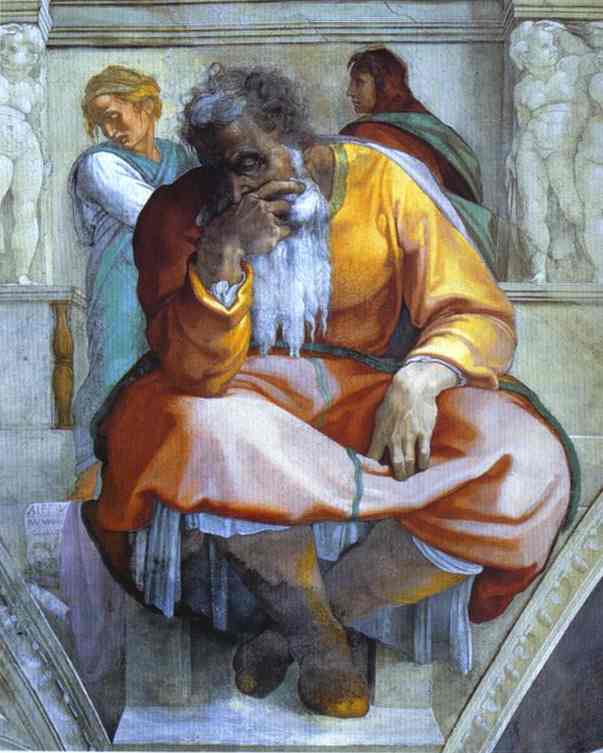
Jeremiah, Jeremy The Book of The Prophet


[He. Yirmeya or Yirmeyahu “Yah will Rise”]


Background: This prophet worked in the closing years of Judah

His message was one of warning: God’s judgment must come if the people persist in rebelling against him. Indeed, judgment has become inevitable and they be wise to recognize that God was using Babylon to punish them. When ruling classes were exiled to Babylon Jeremiah told them that God would work out his plans through the exiles. He tried to encourage those in Judah to accept their fate, but his words fell on dead ears. Within the book we have several insights into what this unpopular prophet was thinking and feeling. 52chs

Author: Jeremiah, whose prophecy were recorded by hid secretary Baruch (36:4,32 ) and collected by an unknown compiler:
*1:1,4
* Daniel referred to him as the author of the passages concerning the70 yrs of exiles (25:11, 12; 29:10 Da9:2)
*Matthew names Jr. as the author of 2 quotes from from Jr’s book (Mt2:17, 18 27:9,10)
*As Baruch noted, Jr’s actual words ends in 51:64, ch52-especially 52:32-34, which reflects a time well into exile-may have been added by disciple of Jr. ch52 is almost identical to 2K24:18-25:30)
*From the book, we know more about Jeremiah’s personal life than any other prophet. Some called the prophet of doom, he had few friends and many enemies. Also called as the weeping prophet, he mourned continually for his people and his land (4:19; 8:21; 9:1;10:19)

Date and Location: Jeremiah ministered from about 627 BC (25:3) to about 581(44:1-14) mainly in Jerusalem (22:1,2; 29:1) and other passages where he speak with various kings) The date of the compiler is unknown

Purpose: He proclaimed God’s word concerning 5 areas:
*God: To proclaim that God created and controls everything (10:12-16; 32:26,27)
*Sin: To show the seriousness of Judah’s sin demanded divine punishment God’s remedy for sin: the divine gift of a new heart (31:31-34;33:6-9)
*God’s person to provide the remedy: the Messiah (23:33) who would save Israel from its sin (23:6; 33:16)
*God’s plan for redeemed humanity: Millennial kingdom (23:1-8; 30:9; 33:14-18)

Unique Features:
*Jeremiah was the most persecuted OT prophet
*The only prophet forbidden to pray for his nation (7:16-27)
*The only prophet to record an eyewitness account of Jerusalem’s fall (3:9Lam)
*Jr. contains the bible most extended and detailed prophecies about Babylon, mentioning it 164x more than in all the rest of the bible. Apostle John would give the name Babylon to the city of the Antichrist (Re17,18)
*Jr referred to another prophet Micah (26:18). Jr. was referred to by Daniel (9:2). Though many of the prophets were contemporary, only one other writing prophet, Daniel, was mention by name in print (Ez14:14,20; 28:3). Likewise the prophetic books make only one mention by name of a non-writing prophet (Elijah, Mal.4:5)
*Jr records the last of the 3 most important OT unconditional covenant: Abrahamic (Ge12:1-30) Davidic (2S7:10-16) New covenant (31:31)
Comparison: Other Prophets:
*Jr. was a contemporary of Habakkuk and shared some of his concerns
*Parallel can also be seen with Micah and Haggai(Obad1:1—Jr49:7-22)

Abbreviations: Jer./ Jr./ Je

MV: He that soweth discord among brethren, Pr6:19
Bib1Yr: Mk14-16:8(up to sepulchre)Passover and Last Meal

Friday, August 6, 2010

Isaiah, The Book of The Prophet 2


Purging of The Lips


Superbook 2


THE WALKTHROUGH


Isaiah in 5 Minutes - Part 1


Isaiah in 5 Minutes - Part 2


bib1Yr:Mk11-13The Scribes and Phariseees


Thursday, August 5, 2010

Isaiah ,The Book of The Prophet

[He. Yesha’yah or Yasha’yahu “YHWH has saved” , “salvation of the Lord”]


Background: This book relates to a period of some 300 years. 

Chs1-39 are set in the closing years of the northern Kingdom when Judah relatively safe. Isaiah worked in Jerusalem warning its people that God’s judgement must fall on them because of social injustice and religious hypocrisy. To successive kings of Judah he advised dependence on God’s guidance and protection rather than on political alliances with foreign nations. Jerusalem is spared the same fate as the northern kingdom for the time being. 

Chs40-55 are concerned with the Jewish exiles in Babylon. The message is comfort: God is about to do something and the punishment and pain of the past are over. The return to the land of Israel will recall the deliverance from Egypt

In the final (56-66) section of the book, which is set in the period after the temple had been rebuilt, there is evidence that the new community is in danger of slipping back into old patterns of behaviour. Alongside warnings is a vision of the greatness of God and his plan s for the blessing of the Jews, and through them, of all nations.

Author: Isaiah. Because of the shift in mood and audience between 1-39 and 40-66, some have suggested a separate authors Strong evidence points, however to a single author:

*The commonsense understanding of the statement of authorship (1:1) is that it applies to all 6chs.
*The same style, vocabulary and figures of speech occur in both sections
*NT writers attribute both sections to Isaiah (Jn12:37-41Mt3:3; 4:14-16 Ro9:27-29; 10:16)
*One of the Dead Sea Scroll includes the entire text of Isaiah, without break between 39 and 40.

Date and Location: Isaiah prophesied from 740BC, the year of king Uzziah’s death (6:1) until about 690, during Hezekiah’s reign, in Jerusalem.

Purpose:
*To warn about the danger of alliances with pagan nations and worship of their god
*To warn of jugement, encourage repentance and promise forgiveness and restoration
*To teach a both God’s attributes
*To foretell the coming of the Messiah.

Unique Features:
* 52:13-53:12 stands out of the clearest OT gospel presentation
* A treasury of information about the attributes of God
*Isaiah is the most often quoted in the NT.
*Of the 33 occurrences of the word salvation in the prophets, 26 are in Isaiah


Comparison:
* Isaiah has 66chs, the bible has 66books
*Isaiah’s two sections, with 39 in the first and 27 in the second, mirrors the bible’s 2 main section with 39 and 27 books.
* The first section of Isaiah covers the history and sinfulness of Israel as does OT; the second section of Isaiah covers the history the person and ministry of the Messiah as does NT
*Both Begins and ends with the descriptions of the new heavens and earth (65:17; 66:22; Rv21:1-22:5)

All other Prophets
*Virtually every prophet after Isaiah quotes from or interacts with his prophecies, though none of them mention him by name (See especially Mi., Na. Hb., Zep., Zec., Ho.)

Abbreviations: Isa./ Is.

MV: Feet swift in running to mischief, Pr6:18
Bib1Yr: Mk9,10On The Mountain Top

Wednesday, August 4, 2010

The Song of Solomon/ The Song of Songs / The Canticle of Canticles 3


The Shulamite Woman,Chapter 6


THE WALKTHROUGH


Song of Solomon in 7 Minutes


MV: Feet swift in running to mischief, Pr6:18
Bib1Yr: Mk7,8
Bread multitudes

Monday, August 2, 2010

The Song of Solomon/ The Song of Songs / The Canticle of Canticles 2


. The author of this website( findingtruthmatters.org/articles/sos/) is in saying that this book of Solomon speaks of redemption to Israel.


THE SONG OF SOLOMON CHS 1-2 KJV


MV: A heart that deviseth wicked imaginations, Pr6:17
Bib1Yr: Mk5,6
Jesus

The Song of Solomon/ The Song of Songs / The Canticle of Canticles


[He. Shir Hashirim] [13th century ,L. canticulum ”little song” , canticum “song” ,cantus “song’]


Background: This is presented in poetic form as a “song” about the wonders of sexual love. There are at least 2 individual speakers, a man and a woman, and a group called “friends”. There and conversations between them, but also thoughts of each lover about each other. Many see the Song as symbol of God’s love for his People. 8chs

Author: Solomon (1:1) of at least 1005 songs (1K4:32) this was his best


Date and Location: About 950 BC in Jerusalem.

Unique Features:
*Sgs is unique among Bible books for its intimate look at sexual love. 
*It is one of only two books that do not mention the name of God (the other is Esther) 

 Purpose: To show love between husband and wife. A picture of Christ’s love for his bride(the Church) 

 Comparison: 
   Pro-Sgs 
^Water metaphor to describe women (4:15Pr5:15-18)
^ Gazelle/Doe metaphor to describe gracefulness (2:7, 9, 17 Pr5:19)
^ money can’t buy love (8:7) or wisdom (Pr3:13-15:8, 10, 11) Ec describe Solomon vain search for happiness. Songs at least one time in his early kingship, he did find it


Abbreviations: Song/ SOS/ Sgs/ Sg/ SS/ Cant/ Ca

MV: Hands that shed innocent blood, Pr6:17
Bib1Yr: Mk1-4
John The Baptism

Sunday, August 1, 2010

Ecclesiastes, The Book of


[He. Qoheleth “preacher”]


Background: The name of the book means something like “The Teacher” and the central word is “meaningless”. 

The writer examines every aspect of life: wealth, social position, professional success and pleasure and concludes that they are futile because of the fact of death which comes to everyone The only positive suggestion is that we should enjoy whatever God has given us, and in 12:13 the Teacher states his conclusion: Fear God and keep his commandments. 12Chs

Author: Solomon
*King David’s son who ruled in Jerusalem (1:1)
*The description of wealth and variety of experiences fits Solomon
*Solomon ask wisdom from God (13:1-13; 4:29-34)

Date and Location: Ecclesiastes was likely to be written in latter years of his life c.935 BC in Jerusalem.

Purpose: To show how utterly meaningless life is apart from God.

Unique Features:
^Because its focus on the meaningless of life, Ecclesiastes has unique appeal to people of all religions
^The repetition of vanity (29x) and under the sun (27x) constitute the most prominent emphasis of a single word phrase in any biblical book.

Comparison: See Job and Proverbs


Abbreviations: Eccles. / Eccl. /Ecc. / Ec.


THE WALKTHROUGH


Ecclesiastes in 7 Minutes


MV: Lying Tongue, Pr6:17
Bib1Yr: Mt27,28The Sacrifice

Saturday, July 31, 2010

Proverbs, The Book of


[He. Mashal”proverb” ,pl. “Mishle “Proverbs of”]


THE BOOK OF PROVERBS


Background: The first 9chs. are written as though a father, or perhaps a teacher , is giving advise to a son or a student. After this each verse presents a proverb as we know proverbs today-concise, common sense and often witty statements about wise, successful living. Dominant themes include: poverty, justice, pride, self-control, drunkenness, anger, speaking wisely. 31chs


Author:
*Solomon:1 section (1-9) 2(10-22:16) 3[Not directly ascribed to him (22:17-24:34) 4(25-29) 7(31:10-31)] containing at least 800 of his 3,000 (1K4:32)
*Agur, non-Israelite,5 (30)
*Lemuel (scholar thinks his Solomon) 6(31:1-9)

Date and Location: Solomon reigned 970-930BC. The advisers of king Hezekiah (25:1) would have lived some 200yrs. after Solomon. Dates for the anonymous (unknown compiler, but many of it may have been Solomon’s), Agur, and Lemuel are unknown

Purpose:
*To the simple who have not yet made up their mind between way of wisdom and of folly. It seeks to impart to them the wisdom that comes from the fear of the Lord and to show them how to apply that wisdom to life

Comparison:
The Torah
^Outline god’s laws and specify blessings for obedience and punishment for disobedience; Pr. presents righteous behavior as being in the best kind of life

Job
^Both praise wisdom (1:1-9 Jb28:12-28)
>Both show that wise and righteous people are not always rewarded with health and wealth

Psalms
^Both contrast the righteous with the wicked (Ps1, 37)
^Both emphasize fear of the Lord (1:7; 9:10; 16:6 Ps111:10; 112:1; 128)

Ecclesiastes
*Both praises wisdom (1:1-9 Ec9:14-18)
*Both despise fool( Ec10)
*Both emphasizes fear of the Lord (1:7; 9:10; 16:6 Ec12:13)
*Both certain practical institution (27:23-27; part of Ec5, 7)
*Both affirm that all people are sinners (20:9 Ec7:20)


Abbreviations: Prov./ Pro./ Prv./ Pr.(s)


THE WALKTHROUGH


Proverbs in 7 minutes


MV: 1 Proud look, Pr6:17
Bib1Yr: Mt25,26
Kingdom of Betrayers

Friday, July 30, 2010

Psalms, The Book of 3

Fragment of the Book of Psalms , from the Qumran caves


THE WALKTHROUGH


Psalms in 9 minutes


MV: The Way of Ascent: 6 hates, 7 abomination, Pr6:16
Bib1Yr: Mt23, 24Teacher’s Enjoyment


Thursday, July 29, 2010

Psalms, The Book of 2

see The Truth of The Matter 2


MV: 2Co1:12-14
Bib1Yr: Mt 21,22Last Supper

Wednesday, July 28, 2010

Psalms, The Book of

[He. Sefer Tehillim “Book of Praise”


Background: Sacred songs, poems, and prayers which originated in originated in Israel’s worship and her experience of God. Traditionally associated with David but reflect centuries of individual and corporate responses to God. Human emotions of anger, despair, sadness, guilt, doubt, joy, praise and adoration are expressed. Theme included the Law, Jerusalem and its temple, Israel’s history , the natural world, human suffering and God’s justice. 150chs

Author:
*David,73(some authority 74) and 2(Ac4:25,26He4:7) are credited
*Either Asaph, a Levite in charge of worship music in the tabernacle (1Ch15:16, 17) or 1 of his descendants authored at least 12 (50,73-83)
*Korah (Nu16), authored 12 psalms. Psalm88 list Heman the Ezrahite (1Ch6:333) as an authored along with them
*Solomon, wrote Ps72,127, some authority 12
*Moses, authored the oldest Psalm,90
*some scholar, King Hezekiah as author of the unattributed “song of ascents” (120-134)
*Ethan the Ezrahite wrote at least one,Ps89
*32 or less of the psalms are unattributed

Date: Written over a period of about 900yrs, from the time of Moses (90, about 1405) to the time of Israel’s return from Babylon exile (125, 147-150), written c500BC

Purpose:
^Showing characteristic of God
^Taught Israel about God’s work in their history
^Showing Messianic prophecies
^Showing prayers of personal confession and repentance (51)
^Calling on God to punish the wicked(7,35,55,109)over violation of God’s laws than seeking their own vengeance (Dt32:35) Ro12:19
^For the victims of sins by hatred for sinners (10:8,9)
^Praying for their enemies as well
^Even NT pronounced curses on people under circumstances, Ga1:8,9; 2P2:12

Unique Features:
^Most personal, as it focuses on the relationship between God and the believer
^Secondly quoted in the NT, most Messianic OT book. Jesus quoted from it at the beginning and the end of his earthly ministry (69:9-Jn2:17; 31:5-Lk23:46)

Most Notable
^Most beloved and widely quoted (23)
^Longest (119) and shortest (117)
.Most personal confession and repentance (51)
^Ps136 was explain as an allegorical way of stating that human passions could be mortified and stifled by recourse to the rock of Christ

Comparison:
1Sam
*Recount key events in David’s life

Isa
*Christ suffering on the cross (22:6-18; 69:20,21 Is52:13-53:12)
*Restoration of God’s people through the Messiah (14:7; 53:6; Is49:6)
*Christ Eternal reign (18:50; 45:6; 102:26 Is51:6-8; 60:20)
*Christ judging the nations (2:8, 9; 72; 96:13;110:6;Is2:4; 11:4;42:1,4)

Abbreviations: Psa./ Ps(s)

MV: 1Ti4:13
Bib1Yr: Mt19, 20The Test and Other Parables

Tuesday, July 27, 2010

Job, The Book of 3


why don't you curse God and die, Job 2:9,10


THE WALKTHROUGH

Job in 8 Minutes


MV: Jas1:22
Bib1Yr: Mt17, 18Transfiguration